

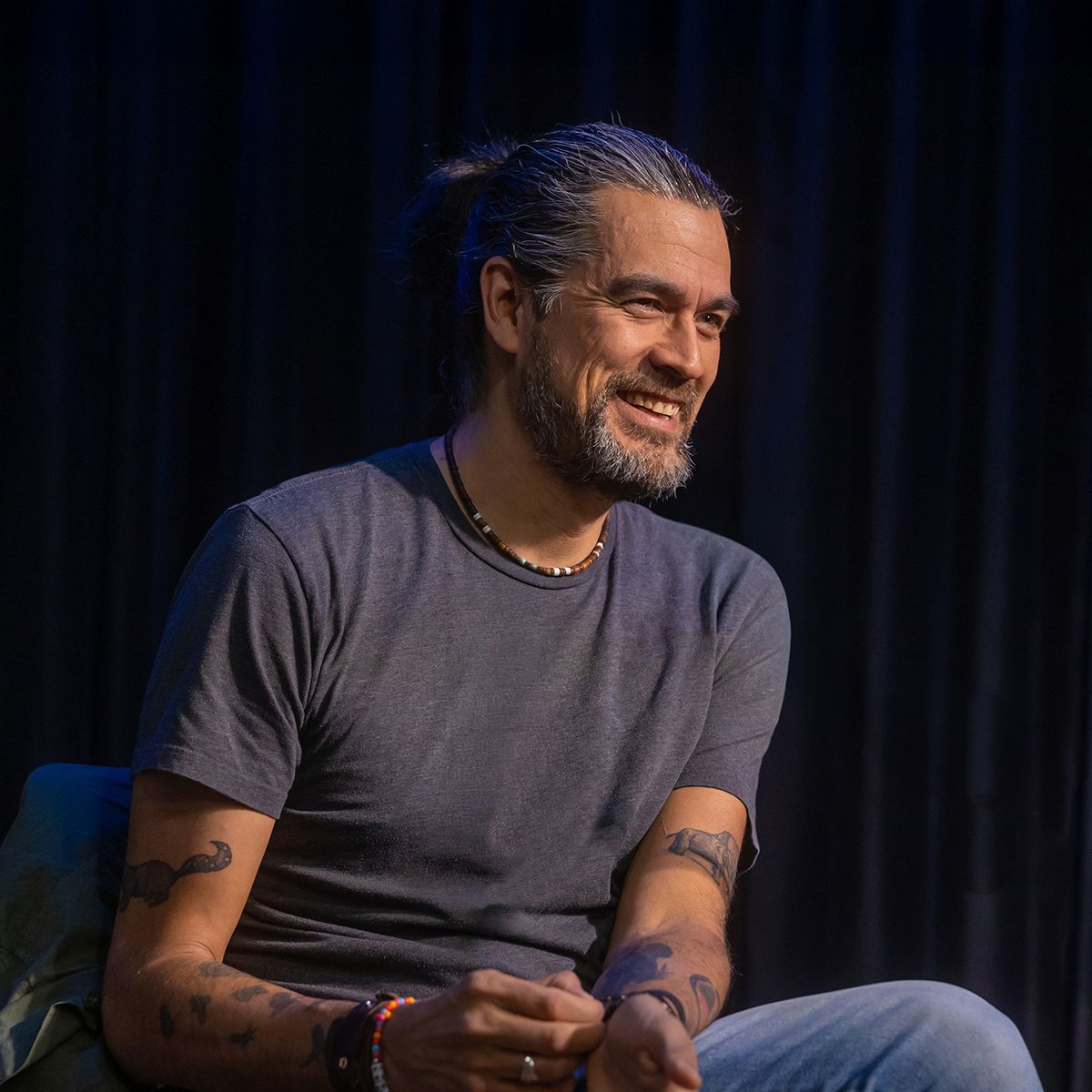
Book David A. Robertson, Indigenous History & Affairs Speaker
About This Speaker
David A. Robertson stands as one of Canada’s most influential voices in literature and public discourse. A member of Norway House Cree Nation, he is a celebrated author, graphic novelist, and podcaster. His work offers profound insights into critical topics like Indigenous themes, mental health, and freedom of expression. Throughout his career, David’s extensive body of work has earned him widespread acclaim. This includes two Governor General’s Literary Awards and numerous other honours. On the world stage, he is Canada’s nominee for the prestigious Hans Christian Andersen Award. Furthermore, his significant contributions to the arts have earned him honorary doctorates from both the University of Manitoba and the University of Lethbridge.
At the heart of David A. Robertson’s work lies a deep commitment to sharing Indigenous stories and perspectives. His celebrated novels, such as The Theory of Crows, explore profound human themes. Similarly, his powerful memoir Black Water delves into family, legacy, and cultural reconnection. He also created the award-winning podcast Kíwew to further explore these narratives. In every medium, he tackles essential conversations with honesty and grace. Consequently, his work reflects the resilience and love that anchor Indigenous communities.
As a keynote speaker, David A. Robertson translates these powerful narratives into unforgettable lived experiences. He shares deeply personal insights drawn from his own life to connect authentically with his audience. With this platform, he educates and inspires people on crucial topics like Indigenous rights and mental health awareness. His presentations are not merely informative; he designs them to spark genuine dialogue and encourage empathy among colleagues. Moreover, this approach empowers teams, leaving them with a renewed sense of connection and shared purpose.
What people are saying about David
David A. Robertson is a phenomenal speaker – incredibly engaging and easy to listen to. He masterfully wove in the perspective of mental health from an Indigenous lens.
- Service Canada
[David is] a mentor to educators across our country. His book did not feel like a dare or a violent imposition. It felt like an invitation for action. Thanks for reminding us that we have the opportunity, the capacity and the responsibility to make a difference.
- Educator
It was such a memorable experience for the children. We thank him for taking the extra time with the class and letting them share their art with him. It was truly inspiring and a day we won’t forget.
- Toronto District School Board
Contact an agent to get David A. Robertson's availability and rates
Videos
Speaking Topics: David A. Robertson
52 Ways to Reconcile – Making Reconciliation Real and Relatable
David A. Robertson, one of Canada’s most celebrated Indigenous authors and storytellers, brings his acclaimed book 52 Ways to Reconcile to life in this keynote designed to engage, inspire, and empower audiences to move reconciliation forward in tangible ways. Reconciliation often feels overwhelming or abstract, but Robertson has an unmatched ability to break it down into accessible, human stories and practical steps. With humour, honesty, and empathy, he connects with audiences on a deeply personal level, showing that reconciliation isn’t just a national project—it’s a journey we can all participate in. This keynote explores: • The Power of Storytelling – Why stories connect us, and how they can bridge divides. • Everyday Actions, Lasting Change – Practical, meaningful ways each of us can contribute to reconciliation in our workplaces, schools, and communities. • Accessibility Through Engagement – How humour, vulnerability, and authenticity can open space for difficult conversations. • Shared Responsibility – Understanding reconciliation not as an obligation, but as an opportunity to build stronger, more inclusive futures together. Whether speaking to business leaders, educators, or community members, Robertson makes the work of reconciliation approachable and engaging, leaving audiences not only informed but inspired to take action—one step, one story, one relationship at a time.
How I Learned to Live with Anxiety: Representation and Normalization of Mental Health Through Story
Through various stages of work over almost two decades, storytelling has become a clear path to healing. This is true of Indigenous representation, but it has proven true with mental health conditions. The journey towards this realization, and the journey of mental health itself, has not only helped the healing process but, in openness through lived experience, has helped others to heal. This presentation is a discussion of one person’s mental health experience, from living with it to sharing it, focussing on a memoir that documents that journey but also reflects the experience of so many others. This presentation is as much for youth as it is for the educators who “stand up front” of youth for a difficult but vital job in the classroom.
Representation Matters
Representation is an element of reconciliation – the path Indigenous and non-Indigenous are walking towards to heal a broken relationship caused by the impacts of colonialism. Representation in young people’s literature, art, and popular culture is about how we see ourselves and how we see each other. It is about how, in the ways we have been conditioned to perceive, the impacts can be positive or negative, with profound impacts in either outcome. But representation does not stop at how people of colour and marginalized groups are depicted and the ramifications of those depictions; it extends to other areas, including the life-saving normalization of mental health rather than mental illness for youth and the presence of diverse voices in real life that shatters stereotypes and writes a new story of empowerment, hope, healing, and stronger communities.
Writing as Social Activism
The road to reconciliation is paved with Story. The phrase "Truth & Reconciliation" means the two are inextricably linked. While the definition and understanding of what reconciliation means and what it entails are up for discussion — at its most basic, albeit still complex form, it is the act of building community — truth means what really happened, and what is still happening, on Turtle Island. For too long, our stories, as Indigenous peoples, have been told by others. Only recently, within the last fifteen years, we have been able to reclaim our truth and share it with others through Story. This storytelling resurgence has created a revolutionary change that has ripped apart the fabric of what we thought this country was, and has stitched together a new understanding of Canada. Every form of writing — from blog posts to novels — is distinct, but shares the goal of knowledge transfer. Story ought, as well, to motivate the reader to utilize the knowledge they have been gifted with to take meaningful action so that we can do better than has been done in the past. This is the work of social change: understanding what has been so we can clearly understand what can be.
Freedom to Read and Book Banning
Book banning is happening with increasing frequency in Canada. Primarily, the target of book challenges and bans is marginalized authors and their diverse work. Ostensibly, the removal of books, or the attempted removal of books, is positioned as a way to protect children. But banning books does not erase diversity, the reality that the people we are silencing are vibrant and active members of our communities. Drawing on his own personal experience with book banning, Robertson will discuss the act of censorship, citing real-world examples, the effect of censorship, and what we can do to fight against it.
The Journey of The Misewa Saga: Teaching and Learning Through the Portal of Fantasy
Almost ten years ago, an idea presented itself through learning about the constellations from a Cree perspective. That idea was a seed that eventually grew into a series entitled The Misewa Saga, a series that is now nearing its completion. This presentation will document the initial spark of this fantasy world, the craft of developing it into a long-term series, and the intention of teaching through it, and what that education would be. At once a recap, a love letter to traditional storytelling, an exercise in the craft of writing, and a discussion of difficult subjects that can be taught through literature, this presentation is for anybody who has found value in The Misewa Saga or those who are curious about it.
Related speakers

Related news and insights
July 9, 2025 · 5 min. read
Top 10 Canadian Guest Speakers | Book In-Demand Talent
From health experts and changemakers to bestselling authors and rising stars—meet 10 of the most in-demand Canadian guest speakers making an impact on stages nationwide.
October 9, 2025 · 5 min. read
Top Mental Health Speakers for Events
Meet five mental health keynote speakers who inspire, educate, and transform audiences at events of all kinds.

January 25, 2024 · 5 min. read
Keynote Speakers to Watch in 2024
Talent Bureau works with North America’s most influential keynote speakers to provide audiences with the right solutions to their workplace challenges.